ORBISPECT
For hydropower operators · flood reinsurers · water agencies

Inflow and flood risk, read from the whole catchment — weeks before a gauge sees it.

A river gauge tells you what already passed it. We observe the entire contributing catchment from orbit — snowpack water content, precipitation, evapotranspiration and soil moisture — and turn it into a streamflow and flood-risk outlook ahead of time. Every forecast is delivered as a scenario band, not a single line, so you plan turbines, set flood reserve and price treaties against a quantified range.

HEADLINE VALUE

A catchment-wide streamflow and flood-risk outlook with a calibrated P10–P90 band on every horizon, benchmarked basin by basin against national river-gauge networks — with skill reported per basin, not hidden inside a flattering average.

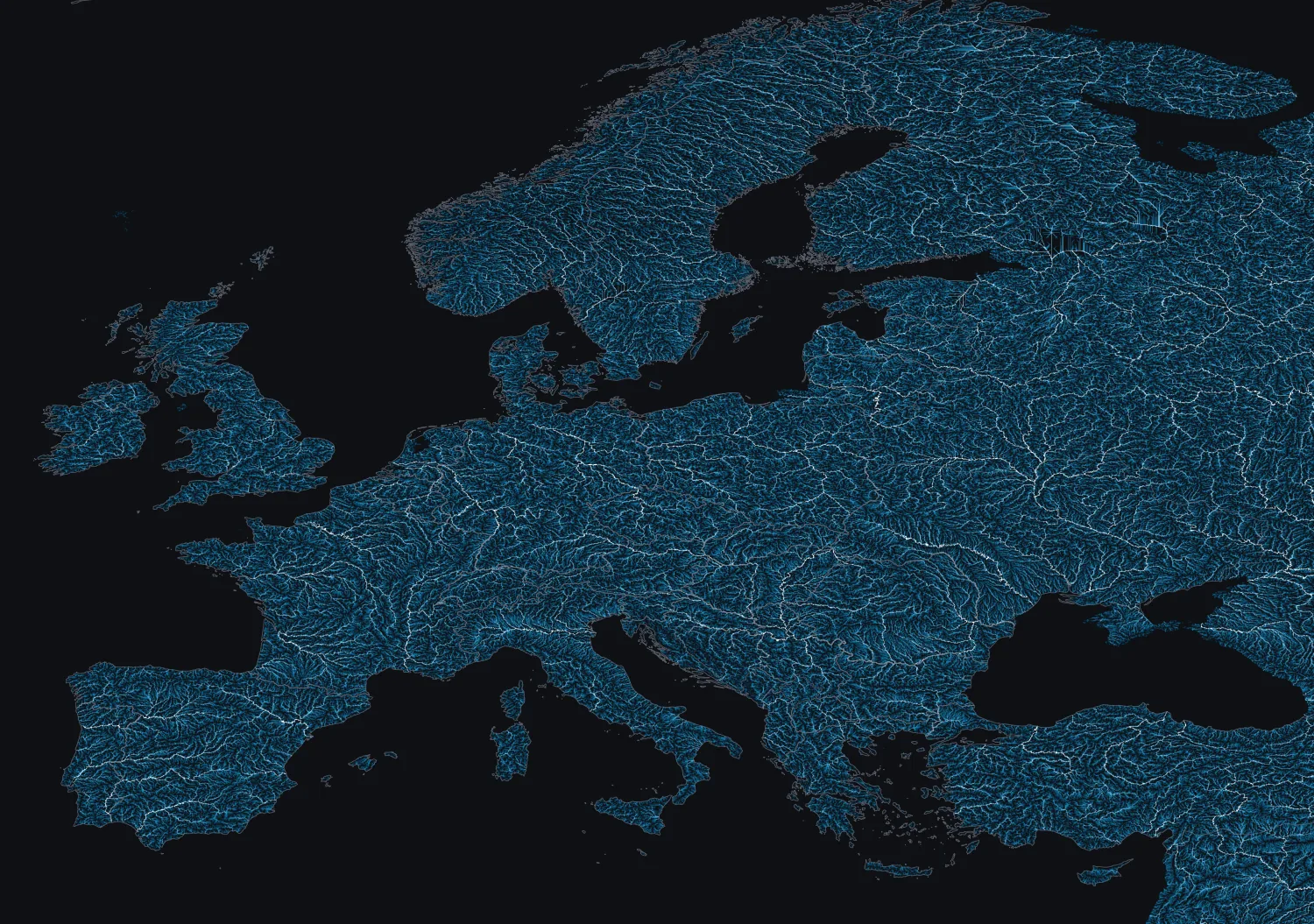
Catchment streamflow and flood-risk network across Europe
CATCHMENT-WIDE STREAMFLOW & FLOOD SIGNAL · ILLUSTRATIVE RENDER FROM OUR PIPELINEMULTI-SENSOR CATCHMENT OBSERVATION × ORBISPECT ENGINE
FORECAST AS
Scenario banda P10–P90 range on every horizon — the operator gets a calibrated spread to plan against, never a single deceptive number
VALIDATION
Per basinskill benchmarked river by river against national gauge networks; weak basins are labelled low-confidence in the product
LEAD TIME
Days to weeksstrongest where inflow is snowmelt-driven and the catchment is well observed; shorter for flashy rain-driven events
01 / THE OPERATOR CHECKLIST

The questions an operator and an underwriter both ask.

No single accuracy percentage is quoted below. The differentiator is a calibrated scenario band on every forecast and per-basin skill you can audit against independent gauges.

A · ACCURACY & VALIDATION

How do I know the forecast holds?

Because it is shipped as a conformal scenario band with guaranteed coverage, not a single line, and because the band is verified out of sample. When we state a P10–P90 range, the realised flow falls inside it at the stated frequency — that is the property an operator schedules against and an underwriter prices against. Skill is benchmarked basin by basin against national hydrological gauge networks and reported per basin, release by release.

  • Independent referee. National river-gauge networks are the reference; the comparison is re-run with each release.
  • Honesty rule. Basins below the skill threshold ship with a "low confidence" label rather than being dropped or dressed up.
  • Validation pack. Per-basin skill tables ship with the product and stay current for the contract.
B · RESOLUTION & UPDATE FREQUENCY

How fine, how often?

Spatial: resolved per basin / catchment and per gauge node, with the contributing area observed pixel by pixel rather than as a single point.

Temporal: refreshed as new satellite passes arrive — optical depends on clear sky, while radar continues through cloud to keep the catchment observed.

C · INTEGRATION

How does it reach my systems?

  • API — per-node flow scenarios and flood-risk values.
  • GeoTIFF — catchment and inundation-extent rasters.
  • PDF report — basin outlook brief for operations and treaty files.
  • SaaS dashboard — hosted basin monitoring.

The API delivers tag-style values and bands that a SCADA / dispatch or hydro-scheduling system can ingest as derived inflow inputs.

D · TECHNOLOGICAL LIMITATIONS — HANDLED HONESTLY

Where lead time shortens, and what we do about it

Lead time is honest, not uniform. It is strongest when inflow is snowmelt-driven and the catchment is densely observed, and it shortens for flashy, rain-driven flood events where the signal develops in hours, and where persistent cloud thins the optical record. We do not paper over this: the scenario band widens automatically as predictability falls, so a hard-to-forecast catchment shows a visibly wider range rather than a confident wrong number. Cloud gaps in optical sensing are bridged with radar, which keeps water extent and soil-moisture signals flowing through weather that blinds optical sensors.

Sparsely gauged mountain basins, which are hard to verify, are labelled low-confidence rather than presented at face value.

E · COMPLIANCE & STANDARDS

Where it fits

Outputs are designed to support flood-risk assessment, water-agency planning and dam operating-rule reviews, with an auditable basis that can be checked against national gauges. Processing runs under EU data residency.

We do not claim an official hydrological-forecasting designation we do not hold, and we say so. The product complements national services; it does not impersonate one.

F · DELIVERY FORMATS

What you actually receive

  • API with per-node flow scenarios + flood-risk values
  • GeoTIFF catchment / inundation rasters
  • Vector tables (CSV / GeoPackage)
  • PDF basin outlook reports
  • Hosted dashboard; SCADA-ingestible feed
G · FORECAST HORIZON

How far ahead it speaks

Horizon runs from a short range for flash, rain-driven flood events up to a multi-week outlook where inflow is snowmelt-driven and the catchment is well observed. Every horizon carries its own band — the further out, the wider the spread — so turbine scheduling, flood-reserve drawdown and treaty exposure are each set against an honest, quantified range.
02 / SPECIFICATION AT A GLANCE

One table for the procurement file.

ATTRIBUTESTREAMFLOW & FLOOD INTELLIGENCE
Primary clientHydropower operators, flood reinsurers, water agencies
Spatial resolutionPer basin / catchment and per gauge node; contributing area observed pixel by pixel
Update frequencyAs new satellite passes arrive; radar maintains observation through cloud
UncertaintyCalibrated P10–P90 scenario band (conformal, guaranteed coverage) on every horizon
Validation referenceNational river-gauge networks; skill reported per basin
DeliveryAPI · GeoTIFF · vector tables · PDF report · SaaS dashboard
IntegrationSCADA / dispatch / hydro-scheduling ingestible; standard GIS import
Forecast horizonShort range for flash floods to multi-week for snowmelt-driven inflow
Key limitationLead time shortens for flashy rain events and sparse gauging — band widens, basins labelled low-confidence
Compliance relevanceSupports flood-risk and water-agency planning; EU data residency
03 / KNOWN LIMITS

What this product does not do.

// STATED PLAINLY
  • It is not an official flood warning. It is a quantified outlook that complements national hydrological services, not a substitute for them.
  • Flash, rain-driven events have shorter lead time. The band widens to reflect that rather than overstating confidence.
  • Sparsely gauged basins are labelled low-confidence. They are published with that label, not removed to flatter the average.
  • No trained-model accuracy headline is claimed here. The guarantee is calibrated band coverage, verified per basin against gauges.
04 / CASE STUDY

Evidence, when the pilot closes.

PILOT SLOT TO BE POPULATED

Catchment inflow / flood pilot

This slot is reserved for a completed operator or reinsurer pilot. We do not publish a case study before the work exists. When a pilot closes it will carry the basin context, the per-basin skill measured against that client's gauge reference, and the realised band coverage on hold-out events.

CLIENT TYPE
hydropower / reinsurer / water agency — to be confirmed
VALIDATION RESULT
per-basin skill vs gauges — pending
REALISED COVERAGE
band coverage on hold-out — pending

Request the validation pack.

Per-basin skill tables, the band-coverage protocol and the basin-confidence labelling rules ship under NDA with every pilot.

Start a pilot See how we validate